
Introduction
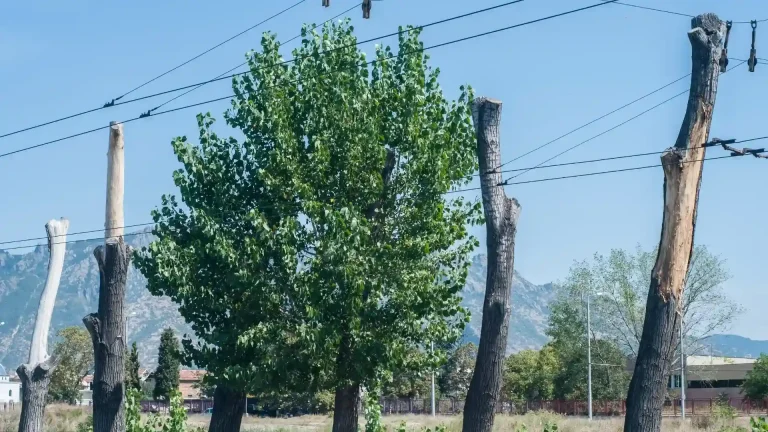
Power lines run through nearly every residential neighborhood in Chesapeake, Virginia Beach, and Suffolk. And trees grow toward them constantly. A tree that was a safe distance from a line ten years ago may be touching it today.
This creates a problem that is more dangerous than most homeowners realize. A tree near a power line is not just a difficult removal job. It is a situation that involves electrical hazards, legal restrictions, utility company coordination, and specialized equipment that most standard tree crews are not equipped to handle.
This guide explains what you need to know before you call anyone about a tree near a power line. We cover the risks, who is responsible for what, how the removal process works, and what you should never do on your own.
Understanding this upfront saves time, prevents dangerous mistakes, and gets the job done right.
Why Trees Near Power Lines Are Uniquely Dangerous
Most people know power lines carry electricity. What most people underestimate is how electricity behaves around trees and water.
Electricity does not need direct contact to jump to a conductor. It can arc through air, travel through wet wood, and ground through a person standing near a downed line. A tree that is touching a power line may be energized throughout its entire trunk and root system. You cannot tell by looking at it.
The specific dangers include:
- Electrocution from contact with an energized tree trunk, branch, or root
- Arc flash if a tool or falling section contacts the line during removal
- Fire if the line is damaged during cutting and sparks on dry debris
- Power outage affecting multiple homes or blocks if the line is severed
- Hidden energization where the tree looks safe but is conducting electricity from a line it contacts higher up
These are not theoretical risks. They are the reason there are legal restrictions on who can work near energized lines and why specialized training and equipment are required.
Who Is Responsible: You, the Utility, or Both?
One of the most common points of confusion for homeowners is figuring out who is responsible for a tree near a power line. The answer depends on what type of line it is and where the tree is located.
Transmission Lines
High-voltage transmission lines are always the utility company’s responsibility. These are the large lines carried on tall steel towers or high wooden poles that move electricity across long distances. Dominion Energy and other utilities manage vegetation around these lines entirely. Homeowners have no role in this work and should stay well away from it.
Distribution Lines
Distribution lines are the lines that run along the streets in your neighborhood, typically on wooden utility poles. These are also the utility company’s responsibility where the line itself is concerned. However, trimming a tree that is growing into a distribution line is a gray area that depends on tree ownership and local policies.
Dominion Energy has a vegetation management program that trims trees around distribution lines on a rotating schedule. If your tree is causing an immediate hazard, you can request expedited attention. However, they will trim only what is necessary to protect the line, not remove the entire tree for you.
Service Drop Lines
The service drop is the line that runs from the utility pole to your home. Responsibility for this line varies. The utility typically owns the line from the pole to the weatherhead on your home. The homeowner is often responsible for the weatherhead and the point of attachment.
A tree growing into your service drop line is a situation where both the utility and a private tree service may be involved. The utility de-energizes or moves the line, and the tree crew then performs the removal. Coordination between the two is necessary.
What a Standard Tree Crew Can and Cannot Do Near Power Lines
This is where a lot of homeowners run into problems. They hire a general tree company, that company shows up, sees the power line situation, and either refuses the job or attempts work they are not qualified to do. Neither outcome is good.
What a standard licensed tree crew can do:
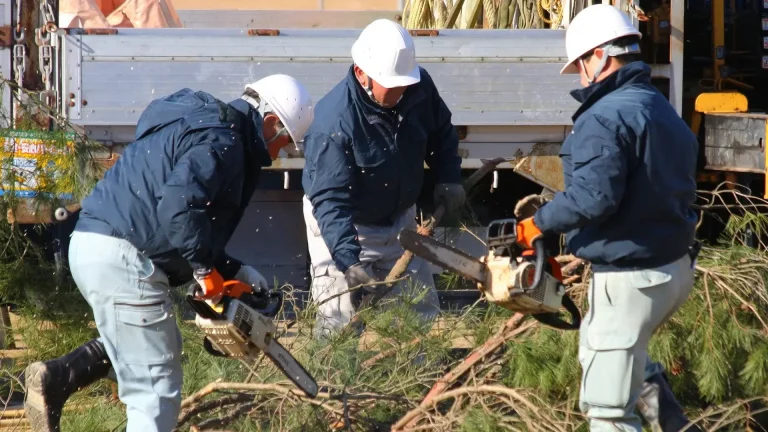
- Remove or trim a tree that is near but not in contact with a power line, maintaining safe working distances
- Work on a tree near a de-energized or insulated line if the utility has confirmed it is safe
- Coordinate with your utility company to have a line temporarily de-energized for the job
- Perform removal after the utility has cleared the line or moved it away from the work zone
What a standard tree crew cannot and should not do:
- Work on any tree that is actively in contact with an energized distribution or transmission line
- Cut branches that would fall onto or contact a live line
- Assume a line is de-energized without written or verbal confirmation from the utility
- Use metal equipment or ladders within the minimum approach distance of an energized line
757 Tree Solutions is upfront about these limitations. If your tree situation requires utility coordination, we will tell you exactly what steps need to happen before we can safely perform the removal, and we will help you navigate that process.
The Right Process for Removing a Tree Near a Power Line
- Assess the situation from a safe distance. Do not touch the tree or get close if you suspect it is in contact with a line. Call a professional to evaluate.
- Call your utility company if the tree is touching the line. Dominion Energy has a 24-hour outage and emergency line. Report the hazard and let them assess whether the line needs to be de-energized before work can begin.
- Get a tree removal estimate. Once you know the utility company’s timeline and plan, bring in a licensed tree service for an estimate. Make sure they have experience with line-clearance situations.
- Coordinate the utility de-energization with the removal. The utility de-energizes or moves the line, and the tree crew completes the removal within that window. Timing coordination matters.
- Complete removal and cleanup. Once the line is cleared, removal proceeds like any other job. Stump grinding can follow as a separate step.
What You Should Never Do With a Tree Near a Power Line
These are the mistakes that cause fatalities. None of them are worth the risk.
- Never attempt to prune or cut a tree that is touching or very close to a power line yourself
- Never assume a line is safe to be near because it looks insulated. Insulation on distribution lines degrades and is not designed to protect workers
- Never use a ladder, pole saw, or any equipment that could contact a line
- Never let children or bystanders near a tree that may be energized
- Never wait to report a downed line or a tree in contact with a line. Call 911 and your utility immediately
If a storm has brought a tree down onto a power line in your yard right now, stay inside, keep everyone back, and call 911. Then call Dominion Energy. Do not go outside to look at it, photograph it up close, or attempt any kind of intervention.
When Crane Removal Is Involved With Power Line Jobs
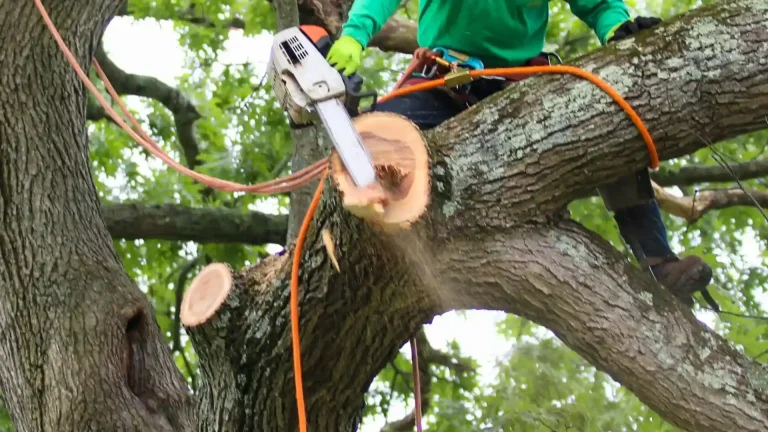
Trees near power lines frequently require crane tree removal because there is no safe direction to drop sections without risking contact with the line. A crane allows the crew to lift sections straight up and away from the line rather than letting them fall in an uncontrolled direction.
This is one of the most technically demanding jobs in the tree care industry. It requires precise crane operation, experienced rigging, and clear communication between the crane operator, the climber, and the ground crew. When 757 Tree Solutions handles power line adjacent removals, this level of coordination is standard.
Frequently Asked Questions
Can Dominion Energy remove my tree for free if it is near a power line?
Dominion Energy will trim branches that directly threaten the line at no cost to you as part of their vegetation management program. They will not remove the entire tree unless it is a direct and immediate threat to their infrastructure. Full tree removal is typically your responsibility as the property owner.
How close to a power line is too close for DIY tree work?
OSHA establishes minimum approach distances for energized lines. For most residential distribution lines, untrained workers should maintain at least ten feet of clearance. In practice, if your tree work would bring you within ten feet of any line, it should be handled by a professional.
What if a neighbor’s tree is growing into the power line on my side?
Report the hazard to your utility company. They may address it through their vegetation management program regardless of who owns the tree. If there is property damage risk, contact your insurance company as well.
How long does it take to coordinate utility de-energization for a tree removal?
It varies significantly. Emergency situations involving active hazards may be addressed same-day. Scheduled de-energization for a non-emergency removal can take anywhere from a few days to a couple of weeks depending on the utility’s workload. Plan ahead if possible.
Does 757 Tree Solutions handle tree removal near power lines in Chesapeake VA?
Yes. We have experience with line-adjacent removals and will help you coordinate with Dominion Energy or your utility provider to ensure the work is done safely and legally. Call us for an assessment and we will walk you through exactly what the process will look like for your specific situation.
Conclusion
Tree removal near power lines is not like any other tree job. The electrical hazards are real, the legal restrictions are strict, and the consequences of a mistake can be fatal. This is not a situation where experience and confidence are enough. It requires the right credentials, the right equipment, and coordination with your utility company.
If you have a tree growing into or near a power line on your Chesapeake VA property, the right move is to call a professional before anything else. Get an assessment, understand the process, and let qualified people handle the work.
757 Tree Solutions serves Chesapeake, Virginia Beach, Suffolk, and the surrounding Hampton Roads area. We handle dangerous tree situations every day and will give you a straight, honest assessment of what your job involves. Call us to get started.