
Introduction
After years of working across Hampton Roads, our crew has seen the same tree care mistakes repeat themselves constantly. They happen in every neighborhood, with every type of tree, at every price point. And in almost every case, the mistake ends up costing the homeowner significantly more than doing it correctly from the start would have.
This is not a list designed to make anyone feel bad. Trees are complicated, tree care is not intuitive, and most homeowners have never been taught what good tree maintenance looks like. The industry does not help either. There is a lot of bad information online, a lot of unqualified contractors giving confident-sounding advice, and a general tendency to treat trees as low-priority until something goes wrong.
This guide covers the most common tree care mistakes we see in Chesapeake, Virginia Beach, Suffolk, and the rest of Hampton Roads. Knowing these mistakes helps you avoid them, make better decisions, and get more value out of every tree on your property.
Some of these you may recognize. Some may surprise you. All of them are worth knowing.
Mistake 1: Ignoring Warning Signs Until It Is Too Late
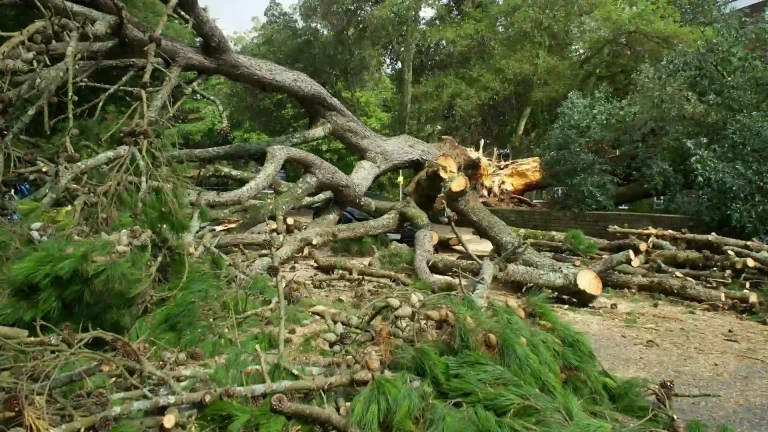
This is the most common and most costly mistake on the list. A tree develops a lean after a storm. A large dead limb appears in the canopy. Fungal growth shows up at the base. The homeowner notices it, thinks about calling someone, and then does not. Weeks pass, then months. Then the tree comes down in the next storm, and the damage bill is three or four times what removal would have cost.
Warning signs do not go away on their own. A leaning tree with root failure gets worse, not better. A dead limb gets heavier and more brittle as it dries out. Trunk decay spreads. The window between noticing a problem and having a manageable situation closes faster than most people expect.
Signs that should trigger an immediate call to a tree professional:
- A new or worsening lean with heaving soil at the base
- Large dead limbs hanging over your home, driveway, or play areas
- Visible trunk decay, soft spots, or fungal growth at the base
- A tree that lost significant canopy in a storm and is still standing
- Any tree that is touching or very close to a power line
A free assessment from 757 Tree Solutions takes less than thirty minutes and gives you a clear answer. That is a far better use of time than hoping the situation resolves itself.
Mistake 2: Topping Trees Instead of Proper Pruning
Tree topping, cutting a tree’s main leader or large scaffold branches back to stubs to reduce its height, is one of the most damaging things you can do to a tree. It is also one of the most common requests we receive, particularly from homeowners who are worried about a tall tree near their home and want it shorter.
The problem is that topping does not make a tree safer. It makes it more dangerous. Here is why. When a tree is topped, it responds with rapid, dense regrowth from the cut points. This regrowth, called water sprouts or epicormic growth, is structurally weak. It attaches to the trunk with poor wood connections that are prone to failure under wind load. Within three to five years, a topped tree often has more canopy than before and branches that are far more likely to fail than the original ones that were removed.
Topping also causes large open wounds that the tree cannot seal properly, inviting decay and disease into the trunk. A topped tree is a declining tree.
If you want to reduce a tree’s height or canopy for safety or clearance reasons, the right approach is crown reduction pruning done by a qualified arborist. Proper pruning removes specific branches at their point of origin or at a lateral branch, preserving the tree’s structure while reducing the parts that are creating a problem.
Mistake 3: DIY Tree Removal or Pruning That Exceeds Your Skills
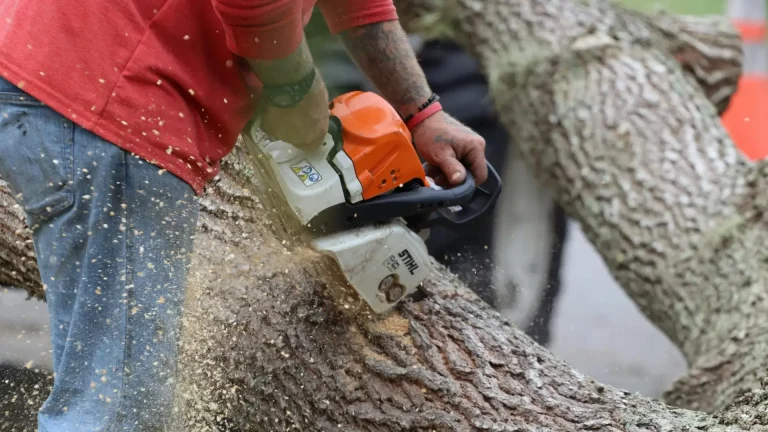
We understand the impulse. A branch is hanging over the fence. A small tree is leaning. A section of trunk came down in the storm and needs to be cleared. You have a chainsaw and you feel capable.
For genuinely small, straightforward jobs in open areas, capable homeowners sometimes handle light tree work without incident. But the line between manageable DIY and dangerous situation is crossed more easily than most people recognize.
DIY tree work becomes dangerous when:
- The tree or branch is within falling distance of a structure, fence, vehicle, or power line
- Any climbing is required beyond a stable, ground-level position
- The wood is under tension from a lean or from partial breakage, which causes unpredictable movement when cut
- The tree is larger than a few inches in diameter at the cut point
- You are using a chainsaw above shoulder height
- There is any chance the tree could contact a power line during removal
Tree work fatalities and serious injuries happen every year to experienced people working without proper training and equipment. Homeowners are disproportionately represented in those statistics. The cost of a professional removal is always less than an emergency room visit or property damage from a job that went wrong.
Mistake 4: Hiring Based on Price Alone
After a storm, in particular, the lowest-priced tree service that shows up at your door is frequently also the least qualified, least insured, and least accountable. Storm chasers and out-of-area contractors follow major weather events looking for work. They are often unlicensed, carry minimal or no insurance, and will be gone before you discover the problems they left behind.
But it is not only storm-chasers. Even during normal conditions, choosing a tree service based solely on the lowest quote is a risky approach for a job that is being done directly above your home, your vehicles, and your family.
What to verify before hiring any tree service:
- Licensed to operate in Virginia
- Carries general liability insurance with adequate coverage limits
- Carries workers compensation for all crew members
- Can provide a certificate of insurance on request
- Has verifiable local references or reviews
- Provides a written estimate, not just a verbal quote
- Is willing to explain their approach and answer your questions
If a tree crew damages your property and they are not properly insured, you may be left paying for the repairs yourself. The few hundred dollars you saved on the quote can turn into thousands in uncovered damage. Verify insurance before any work begins, every time.
Mistake 5: Planting the Wrong Tree in the Wrong Place
Many of the root damage, structural failure, and removal situations we deal with across Hampton Roads trace back to a tree that was planted in the wrong location years or decades ago. A sweetgum planted twenty feet from a driveway. A willow planted near a sewer line. A fast-growing species planted under a power line. A large-canopy tree planted twelve feet from a foundation.
Trees are long-term investments. A tree that looks perfectly placed as a five-foot sapling can become a serious problem at forty or sixty feet. Before planting, consider the mature size of the species, its root behavior, its growth rate, and its proximity to structures, utilities, and property lines.
General placement guidelines for Hampton Roads:
- Large trees (mature height over forty feet) should be at least twenty feet from any structure
- Aggressive-rooting species like sweetgum, willow, and silver maple should be kept well away from driveways, sidewalks, and sewer lines
- No tree should be planted under or directly near a power line that it will eventually reach
- Fast-growing species planted near structures create large problems faster than slow growers
The time to make good placement decisions is before a tree goes in the ground. Once a tree is established, your options narrow significantly.
Mistake 6: Over-Trimming or Trimming at the Wrong Time
Two trimming mistakes show up regularly in our area. The first is taking too much off at once. Removing more than twenty-five to thirty percent of a tree’s canopy in a single session stresses the tree, depletes its energy reserves, and triggers weak regrowth. More is not better when it comes to pruning.
The second mistake is trimming at the wrong time of year. Heavy pruning in late summer stimulates new growth that does not harden before winter, leaving it vulnerable to frost damage. Trimming spring-blooming trees in late winter removes the flower buds they set the previous fall and eliminates the bloom for that year.
Late winter to early spring is the best general trimming window for most trees in Hampton Roads. Flowering trees should be trimmed immediately after they finish blooming. Dead, damaged, or hazardous limbs can and should be removed anytime regardless of season.
Mistake 7: Leaving the Stump After Tree Removal
Stump grinding is almost always worth doing when a tree comes down, but many homeowners skip it to save money and then deal with the consequences for years. An untreated stump attracts termites and carpenter ants, can send up regrowth shoots from the remaining root system for years, creates a tripping hazard, makes lawn maintenance harder, and sits there looking like exactly what it is: an incomplete job.
Stump grinding is far less expensive when bundled with the original tree removal than when scheduled as a separate return visit. If you are getting a tree removed, always ask about stump grinding at the same time. The cost difference is modest. The quality of life improvement is significant.
Mistake 8: Assuming All Tree Services Are the Same
Tree care ranges from basic cleanup crews who can handle debris removal to ISA-certified arborists with decades of experience in complex removals, cabling systems, and tree health management. The difference matters enormously on difficult jobs.
For routine trimming and small removals, many competent crews can do the work adequately. For large tree removals, hazardous tree assessments, trees near structures, crane work, or situations where a mistake has serious consequences, you want a crew with specific experience and the equipment to back it up.
Ask questions. Ask how often they handle jobs like yours. Ask about their approach. Ask for references from similar jobs. A qualified crew will answer these questions comfortably. A crew that deflects or becomes vague when you ask about their experience is telling you something.
Frequently Asked Questions
What is the most dangerous tree care mistake a homeowner can make?
Attempting to remove or cut a tree near a power line yourself is the most immediately life-threatening mistake. A close second is attempting chainsaw work above shoulder height without proper training and equipment. Both situations result in fatalities every year. Neither is worth attempting without professional involvement.
How do I know if a tree company is actually qualified?
Ask for a certificate of insurance and verify it directly with the insurer if you have any doubt. Check for local reviews and references. Ask how long they have been operating in the area. A qualified company will have a track record in the community, verifiable insurance, and crew members who can clearly explain their approach to your specific job.
Is it ever okay to top a tree?
Almost never on a healthy tree. The rare exception is a tree that is being intentionally maintained in a pollarded form, which is a specific horticultural technique practiced on certain species. For standard residential trees, topping is harmful and should be replaced with proper crown reduction pruning by a qualified arborist.
How can I tell if a tree service is using good pruning practices?
Good pruning makes cuts at the branch collar, the slight swelling where a branch meets the trunk or a larger limb. It does not leave stubs, does not flush-cut into the trunk, and does not remove more than about one third of the canopy in a single visit. If you watch a crew work and they are cutting everything back to stubs or leaving large wounds without collar cuts, that is a sign of poor technique.
What is the single best thing a homeowner can do for their trees?
Walk your property once or twice a year and actually look at your trees. Look at the base for heaving soil or fungal growth. Look at the canopy for large dead sections. Look at the trunk for cracks or bark damage. Most tree problems give you warning before they become emergencies. The homeowners who catch issues early are the ones who avoid the most expensive outcomes.
Conclusion
Tree care mistakes are almost always avoidable. They happen because trees are easy to ignore until something goes wrong, because bad information is easy to find online, and because the upfront cost of doing things right can feel like something to defer.
The pattern we see constantly is simple: the homeowners who spend a little consistently on proactive maintenance spend far less over time than the ones who wait until a crisis forces their hand. A dead limb removed during a routine trimming visit costs a fraction of what the same limb costs when it falls through a roof.
If any of the mistakes in this guide sound familiar, the best time to correct course is now, before the situation gets more expensive.
757 Tree Solutions serves Chesapeake, Virginia Beach, Suffolk, and all of Hampton Roads. Whether you need an assessment, a trim, a removal, or just want someone to walk your property and tell you honestly what they see, call us. No pressure. Just straight answers about your trees.