
Introduction
After a storm takes down a tree on your Chesapeake property, the first question most homeowners ask is whether insurance will cover it. The honest answer is: it depends, and the details matter more than most people realize.
Tree removal and insurance is one of the most misunderstood topics we encounter. Homeowners sometimes assume they are fully covered and skip steps that would have strengthened their claim. Others assume they are not covered at all and pay entirely out of pocket for something their policy would have helped with.
This guide breaks down exactly how homeowners insurance handles tree removal in Virginia, what is typically covered, what is not, how neighbor situations work, and what you need to do to protect your claim from the moment the tree comes down.
We are not insurance agents and this is not legal or insurance advice. But we deal with these situations constantly across Hampton Roads and we can tell you what we see work and what we see go wrong.
The Core Question: What Caused the Tree to Fall?
Insurance coverage for tree removal hinges almost entirely on the cause of the loss. Standard homeowners policies in Virginia cover damage from specific named perils, which typically include windstorms, lightning, hail, the weight of ice or snow, and similar sudden events. They do not cover gradual damage or maintenance issues.
The cause of the fall determines whether the event itself is a covered peril. Whether the tree hit a covered structure determines whether the removal cost is included. Both conditions usually need to be true for coverage to apply to removal costs.
Here is a scenario-by-scenario breakdown of how coverage typically works.
| Scenario | Typically Covered? | Notes |
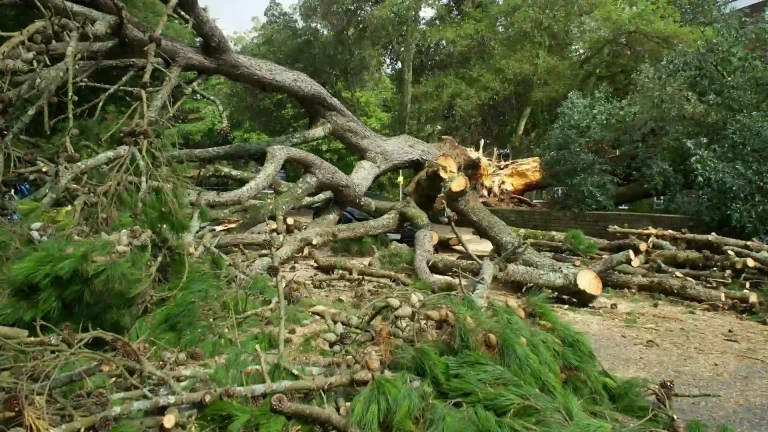
| Storm-damaged tree falls on your home | Yes | Structure damage and removal usually covered, subject to deductible |
| Storm tree falls on attached garage or fence | Often yes | Attached structures usually covered; detached structures depend on policy |
| Storm tree falls in yard, misses all structures | Rarely | Some policies include limited debris removal ($500–1,000 cap) |
| Neighbor’s storm tree falls on your home | Yes (your policy) | Claim goes through your insurer; neighbor only liable if negligent |
| Proactive removal of hazardous tree | No | Preventive removal is a maintenance expense, not a covered loss |
| Dead tree falls on vehicle in driveway | Vehicle: maybe | Comprehensive auto coverage handles the car; homeowners may cover removal if structure hit |
| Tree root damage to driveway or foundation | No | Gradual damage is excluded from standard policies |
What “Covered” Actually Means: Deductibles, Caps, and Limits
Even when a tree removal claim is covered, that does not mean the insurance company pays the full bill. Several factors reduce what you actually receive.
Your Deductible
Most homeowners policies have deductibles ranging from $1,000 to $2,500 or higher. If your tree removal and roof repair totals $4,000 and your deductible is $2,000, insurance pays $2,000. For smaller jobs, the deductible may equal or exceed the total cost, making it not worth filing a claim at all. Calculate your numbers before you call your insurer on a small loss.
Tree Removal Sub-Limits
Many policies have specific sub-limits for tree removal costs, separate from the structural damage coverage. A common limit is $500 to $1,000 per tree for removal, even when the structural damage claim is much larger. This means a $1,500 removal job on a tree that caused $10,000 in roof damage may only get $500 to $1,000 reimbursed for the tree work specifically. Review your policy declarations page or call your agent to understand what your sub-limits are.
Wind Deductibles in Coastal Virginia
Some homeowners policies in coastal Virginia have separate, higher deductibles for wind and hurricane events. If your tree came down during a named storm or a wind event that triggers that separate deductible, you may owe significantly more out of pocket than your standard deductible would suggest. This is especially relevant for Chesapeake, Virginia Beach, and other Hampton Roads communities near the coast. Check whether your policy has a wind or hurricane deductible.
When Your Neighbor’s Tree Falls on Your Property
This situation creates more confusion than almost any other tree scenario. A neighbor’s tree falls on your fence, your car, your roof, and your immediate instinct is that the neighbor should pay.
In Virginia, that is generally not how it works. The principle in most states, including Virginia, is that each property owner is responsible for damage to their own property from a tree, regardless of where the tree originated, unless negligence can be proven.
Neighbor liability requires proving:
- The neighbor knew or should have known the tree was hazardous
- You or another party notified them of the hazard in writing and they failed to act
- The tree’s condition was visibly problematic before it fell
Without those elements, you file a claim through your own homeowners insurance for damage to your property. Your insurer may then pursue the neighbor’s insurer through a process called subrogation if they believe there is a negligence case, but that happens on the back end without involving you directly.
If you have already notified a neighbor about a dangerous tree and they have not acted, document that notification. Send a written letter or email so there is a record. That documentation becomes important if the tree eventually does fall.
Storm Scenarios Specific to Chesapeake and Hampton Roads
Hampton Roads sits in a region that gets significant weather exposure including nor’easters, tropical storms, and occasional direct hurricane impacts. This affects how insurance plays out in tree damage scenarios.
Tropical Storm and Hurricane Events
Named storm events often trigger separate wind or hurricane deductibles as mentioned above. Additionally, when a major storm causes widespread damage across Hampton Roads, insurance companies experience high claim volume and may take longer to process and respond. Document everything thoroughly before any cleanup begins, and do not wait for the adjuster to visit before doing emergency tarping or removal if the structure is at risk of further damage from weather. Most policies allow reasonable emergency measures.
Ice Storms and Winter Weather
Ice accumulation is a significant tree damage cause in Hampton Roads during winter storms. The weight of ice on a canopy can bring down branches or entire trees that would survive high winds. Ice storm damage is typically covered under standard homeowners policies without a separate deductible, unlike wind events. Document ice conditions with photos before they melt if you plan to file a claim.
Saturated Soil and Root Failure Events
After prolonged heavy rain, saturated soil can cause trees with compromised root systems to fall even without significant wind. Coverage in these situations depends on whether the insurer classifies the event as a windstorm or a flooding-adjacent event. If the tree fell during or immediately after a storm, document the weather conditions as part of your claim. If root failure in saturated soil is the apparent cause with no associated storm, coverage is less certain and worth discussing directly with your adjuster.
Steps to Protect Your Insurance Claim After a Tree Event
Document before anything is moved. Photograph the tree from multiple angles, all points of contact with structures, interior damage visible from safe positions, and the weather conditions if possible. Video is useful too.
Call your insurance company promptly. Report the claim and get a claim number. Ask specifically what documentation they need and whether you need to wait for an adjuster before removal begins.
Get emergency protective measures in place. Tarping, boarding, and similar emergency measures to prevent further damage are generally allowed and reimbursable. Keep all receipts.
Get itemized estimates from your tree service. Make sure the estimate separates tree removal costs from stump grinding and any other services. Insurance sub-limits apply specifically to removal, so itemization matters.
Understand your deductible before deciding whether to file. For smaller claims, filing may not make financial sense if the total damage is close to your deductible. Filing a claim can also affect future premiums. Run the numbers first.
Keep copies of everything. Claim numbers, adjuster contact information, estimates, invoices, and any written communication should all be retained.
Frequently Asked Questions
Does insurance cover removal of a dead tree that fell in my yard?
If the tree fell due to a covered storm event and it hit a covered structure, yes. If it fell in your yard without hitting anything, most policies do not cover removal costs beyond a limited debris removal allowance. If the tree was already dead and known to be hazardous, your insurer may also argue negligence and reduce or deny coverage.
Can I be denied coverage because my tree was in bad shape?
Yes, potentially. If an insurer can show that you knew or should have known the tree was hazardous and failed to maintain it, they may reduce or deny the claim on the grounds of negligence or lack of reasonable care. This is another reason why maintaining your trees and keeping documentation of any professional assessments works in your favor.
Will filing a tree claim raise my insurance premiums?
It can, depending on your insurer and your claim history. A single weather-related claim typically has less impact than liability or repeated claims, but any claim can affect your renewal rate. This is worth factoring into your decision on whether to file for smaller losses near your deductible.
What if I cannot afford removal while waiting for the insurance adjuster?
If the tree is on your home and creating a weather exposure risk, you generally do not need to wait for the adjuster before proceeding with emergency removal. Call your insurer, explain the situation, document everything, and proceed with removal. Get a detailed itemized invoice from the tree service. Most adjusters work from documentation and photos, not from needing to see the tree in place.
Does 757 Tree Solutions work with insurance adjusters?
Yes. We provide itemized estimates and invoices that clearly separate tree removal from other services, which is what insurance adjusters need for processing. We have worked with homeowners across Chesapeake and Hampton Roads navigating storm damage claims and can answer questions about documentation as part of our service.
Conclusion
Tree removal and insurance coverage in Chesapeake VA is not a simple yes or no. The cause of the fall, what the tree hit, your specific policy language, your deductible, and any applicable sub-limits all determine what you actually get covered.
The best thing you can do before a tree comes down is understand your policy now, not after the fact. Know your deductible. Know whether you have a separate wind deductible. Know what your debris removal allowance is. That information helps you make better decisions when a storm event actually happens.
If a tree has come down on your Chesapeake VA property and you need emergency tree removal, call 757 Tree Solutions. We respond across Chesapeake, Virginia Beach, Suffolk, and Hampton Roads. We will handle the removal, provide the documentation your insurer needs, and help you get through the process as smoothly as possible.