
Introduction
When most people picture tree removal, they picture a crew with chainsaws, ropes, and a chipper. That setup handles the majority of jobs. But some trees cannot be removed that way safely, and trying to force a standard removal on the wrong job is how property gets damaged and people get hurt.
Crane tree removal is a specialized approach that uses a crane to lift tree sections out of tight or dangerous positions rather than dropping them. It is more equipment-intensive and more expensive, but in the right situations it is the only responsible option.
If a tree company quotes you a job and says it needs a crane, you deserve to understand why. This guide explains exactly when crane removal is necessary, what the process looks like, and how it affects cost. We cover these jobs regularly across Chesapeake, Virginia Beach, and Hampton Roads.
Understanding when crane tree removal is the right call will help you ask the right questions and make the right decision for your property.
How Standard Tree Removal Works (And Its Limits)
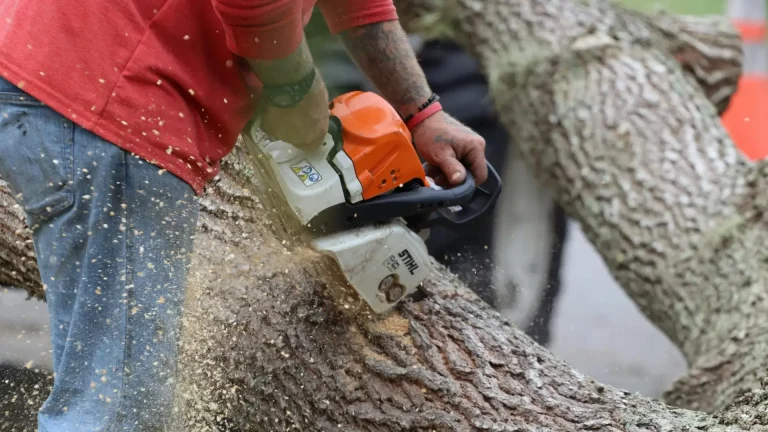
In a standard removal, climbers ascend the tree and remove it in sections from the top down. Each section is either rigged and lowered in a controlled way or dropped into a designated clear zone. The crew on the ground manages the debris as it comes down.
This works well when:
- There is a clear drop zone with enough space for sections to fall safely
- The tree is structurally sound enough for a climber to ascend
- Access for a chipper and debris removal truck is straightforward
- The tree is not directly over a structure or in an extremely confined space
When those conditions are not present, standard removal becomes high-risk. That is where crane removal comes in.
Situations Where Crane Tree Removal Is Necessary
Large Trees Directly Over a Roofline
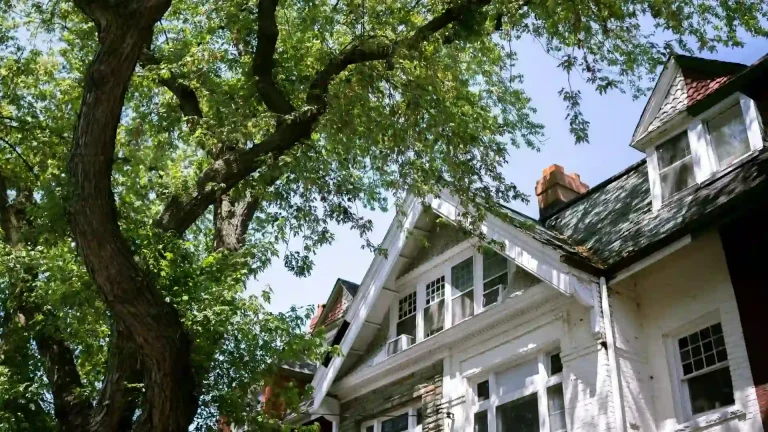
This is the most common reason we bring in a crane. A massive oak or pine growing directly over a home has no safe drop zone. Every section that comes off has to be lifted up and out rather than dropped. A crane makes that possible. Without one, the risk of a section landing on the roof is too high to accept.
In Hampton Roads neighborhoods where large trees grow close to homes, this scenario comes up regularly. Crane removal is the standard approach, not an unusual one.
Tight Access and Confined Lots
Some properties have very little open space. A tree surrounded by a fence, a pool, a detached garage, and a neighboring structure on every side may have no workable drop zone at all. Trying to section it down without a crane means every piece has to be rigged and hand-lowered, which is time-consuming, labor-intensive, and still risky in tight quarters.
A crane can reach over obstacles and lift sections clear of the confined area entirely. What would take a full day of manual rigging can often be accomplished in a few hours with a crane on-site.
Severely Leaning or Structurally Compromised Trees
A tree with advanced internal decay or significant root failure is not safe to climb. If a climber ascends a structurally compromised tree, the tree itself can fail mid-job. That is an unacceptable risk.
Crane removal allows the crew to work from the ground or from a boom lift, attaching rigging to the tree without putting a climber at the top. The crane controls the sections as they are cut, preventing uncontrolled movement from a tree that could fail at any moment.
Trees That Have Already Fallen on a Structure
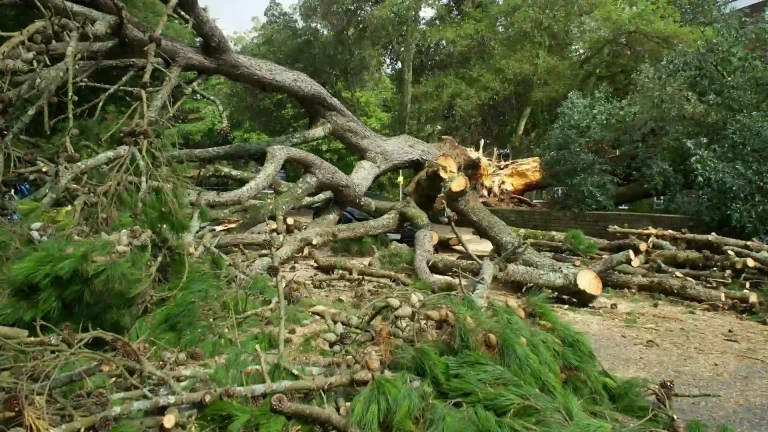
When a tree comes down on a roof, garage, or fence, it is under compression and tension in ways that are not predictable. Cutting the wrong section can cause the tree to shift suddenly, driving it deeper into the structure or swinging a section into something else.
A crane can take the weight of the tree before sections are cut, allowing the crew to safely remove each piece without unpredictable movement. This protects the structure from additional damage and keeps the crew safe.
Very Large Trees in Any Position
Beyond a certain size, some trees simply produce sections too heavy to rig and lower manually without serious risk. A large loblolly pine or a massive water oak can produce individual limb sections that weigh hundreds of pounds. Crane removal handles that weight safely and efficiently.
For extra-large trees, crane removal is often faster than manual sectioning even when access is not a problem, because the crane handles the heavy lifting that would otherwise require multiple rigging setups per section.
What Crane Tree Removal Actually Looks Like
Crane removal is a coordinated operation that requires careful planning before the first cut is made.
Here is how it typically works:
- The crane is positioned on stable ground with a clear line to the tree. Driveway, street access, or a solid staging area is identified during the estimate.
- A rigger attaches a sling or choker to the tree section that is about to be cut. The crane takes the weight before the cut is made.
- The climber or ground crew makes the cut. The crane lifts the section clear and swings it to the drop zone or chipper.
- The process repeats from the top of the tree down, section by section, until the trunk is the only thing remaining.
- The stump is then ground down separately if stump removal is part of the job.
The crane operator and the ground crew communicate constantly throughout. This is skilled, coordinated work. It looks methodical because it has to be.
How Much Does Crane Tree Removal Cost?
Crane removal costs more than standard removal because of the equipment and the additional coordination involved. In the Chesapeake VA area, crane services typically add $500 to $1,500 or more to the base removal cost depending on crane size, setup complexity, and how long the crane is needed on-site.
That said, the comparison to make is not crane removal versus standard removal. The real comparison is crane removal versus the cost of repairing a roof, replacing a fence, or fixing a vehicle that got hit during a removal gone wrong. In that context, crane removal is almost always the less expensive option.
When 757 Tree Solutions recommends crane removal for a job, we explain exactly why it is necessary and what it involves. We do not upsell crane work on jobs that do not need it. If a standard removal can be done safely, that is what we quote.
Questions to Ask Before Hiring a Crane Tree Removal Company
- Is the crane operator licensed and insured separately from the tree crew?
- What is the weight capacity of the crane being used, and is it right for this job?
- Where will the crane be staged, and is there any risk of damage to the driveway or lawn?
- Is stump grinding included, or is that a separate quote?
- Will you coordinate with my insurance company if this is a storm-related claim?
A company that does this work regularly will answer these questions without hesitation.
Frequently Asked Questions
How do I know if my tree needs crane removal?
The best way is an in-person assessment from an experienced tree company. Key indicators include: the tree is directly over a structure, the lot has very limited access or drop zone space, the tree is severely compromised and not safe to climb, or the tree is exceptionally large. If any of these apply, crane removal is likely.
Can a crane damage my driveway or lawn?
Modern cranes have outrigger pads to distribute weight and minimize ground damage. A reputable company will assess your driveway and staging area before bringing equipment in and will discuss any risk with you upfront. Lawn damage from crane staging is possible on softer ground, particularly after rain.
Is crane tree removal covered by homeowners insurance?
If the tree removal is part of a covered storm damage claim, crane costs may be included. Check with your adjuster and make sure the crane is itemized on the estimate. Insurance companies are more likely to approve costs that are clearly explained and justified.
How long does crane tree removal take?
It depends on tree size and complexity, but crane removal is often faster than manual sectioning for large jobs. A single large tree over a structure might take three to six hours from crane setup to cleanup. Multi-tree crane jobs or especially large specimens can run a full day.
Does 757 Tree Solutions handle crane removal in Virginia Beach and Suffolk?
Yes. We handle crane tree removal throughout Chesapeake, Virginia Beach, Suffolk, and the broader Hampton Roads area. If your job requires a crane, we have the equipment and the crew to do it right.
Conclusion
Crane tree removal is not the standard approach for every job, but for the jobs that require it, there is no substitute. Large trees over structures, confined lots with no drop zone, compromised trees that cannot be climbed, and fallen trees on buildings all call for crane work done by a team that knows what they are doing.
If a company tells you your job needs a crane, ask why. A good company will explain it clearly. If a company tells you a crane is not needed on a job that clearly looks like it should, that is a red flag worth taking seriously.
757 Tree Solutions offers free on-site estimates for crane tree removal across Chesapeake, Virginia Beach, Suffolk, and Hampton Roads. We will assess your tree, explain what the job involves, and give you an honest quote. Call us to get started.