

- Available 24/7
- Local Chesapeake VA
- Rapid Dispatch
Chesapeake Crane Tree Removal: When Traditional Methods Aren’t Enough
If you’re dealing with a tree that presents complexity due to height, lean, or proximity to structures, the safest first step is a professional crane evaluation. This specialized approach is used when standard tree removal in Chesapeake VA methods are not sufficient due to size, location, or risk.
Emergency Crane Tree Removal
Some properties in Chesapeake leave no room for error. Some trees reach a size, weight, and structural position where traditional climbing and rigging methods become inefficient and unnecessarily risky. In these situations, tree removal with crane support becomes the most strategic solution. By removing large sections in a single controlled lift, we reduce lateral movement, limit stress on surrounding structures, and improve overall job control.
Crane-assisted removal is often used as part of a broader tree removal service in Chesapeake VA, especially when trees cannot be safely removed using traditional climbing and rigging methods.
When Size and Structural Limits Change the Plan
Mature Tidewater species such as Loblolly Pines and White Oaks can exceed safe rigging thresholds due to height, canopy spread, and wood density. As individual sections increase in weight, lowering them by rope alone introduces greater strain on anchor points and crew positioning. Mechanical lifting allows sections to be removed with improved balance and predictable load control.
Designed for Tight Chesapeake Lots
From older neighborhoods in South Norfolk to cul-de-sacs in Hickory, limited drop zones are common. Crane assisted tree removal allows us to work above structures and obstacles, creating a direct lift path that avoids lateral swing and unnecessary ground impact. Instead of relying on gravity and ground maneuvering, each section is lifted clear in a single, controlled motion.
Technical Execution from Start to Finish
Each crane project involves load assessment, lift mapping, and real-time communication between our certified arborist and crane operator. By evaluating weight distribution, structural tension, and landing zones in advance, we ensure that every lift is predictable and secure.
Crane Tree Removal Service for Tight Lots and Structure-Sensitive Properties
Determining whether a crane is needed depends on more than proximity. Structural lean, compromised root systems, canopy imbalance, and limited rigging anchor points all influence the removal strategy. In these cases, crane tree removal introduces mechanical lifting capacity that reduces reliance on complex rope systems and extended crew exposure.
This method is frequently used in commercial tree service in Chesapeake VA where access, safety, and liability must be carefully managed.
When Site Conditions Limit Your Options
As Chesapeake properties continue to develop around mature tree cover, removals frequently involve fencing, irrigation systems, overhead utilities, and decorative hardscaping. These elements restrict ground flexibility and reduce safe rigging angles. A crane allows removal sequencing to occur above these obstacles rather than through them, minimizing disruption to the property layout.
Why Use a Crane Instead of a Traditional Climber?
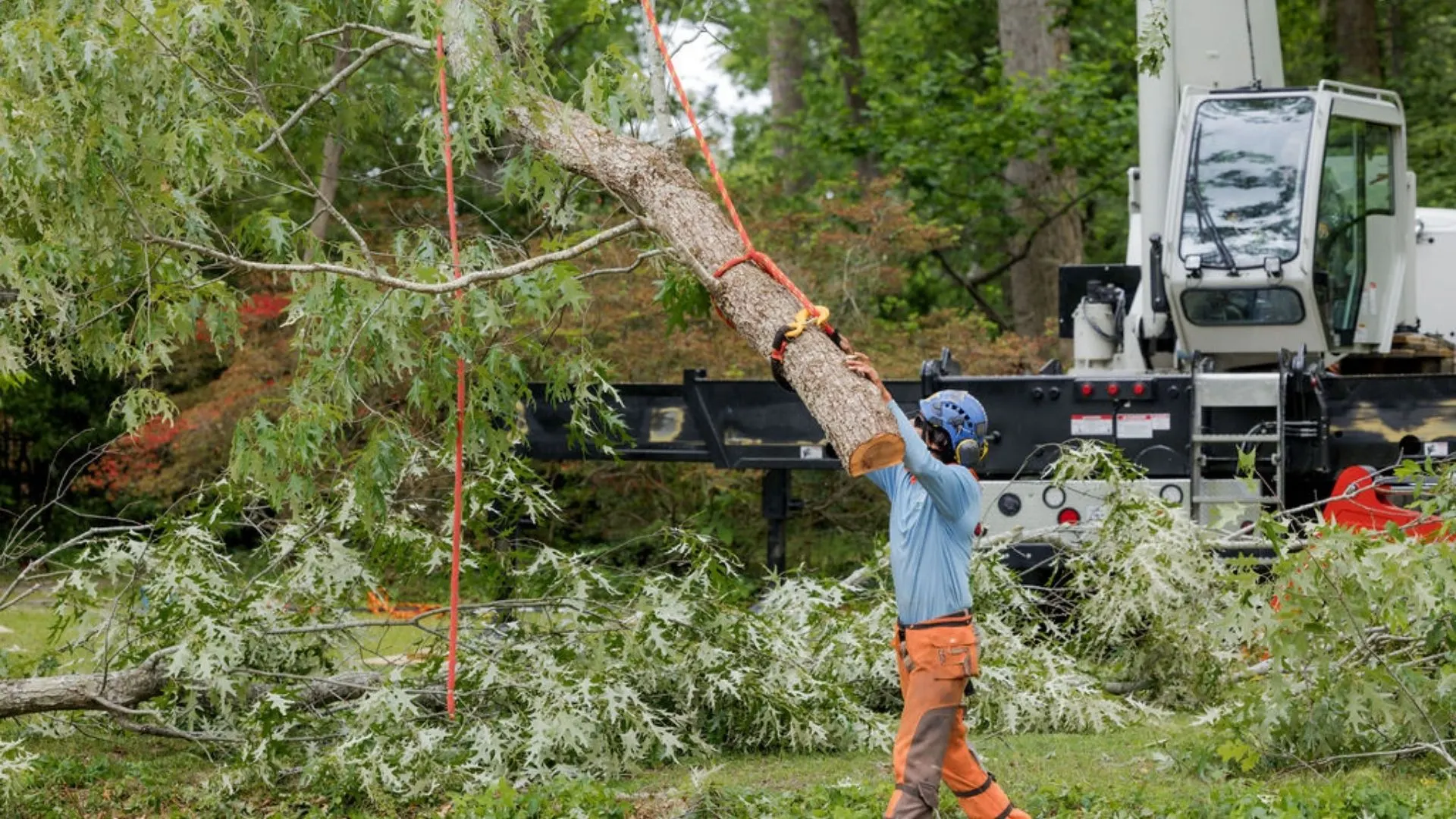
On tight Chesapeake lots, there is often no safe “drop zone.” A crane allows tree sections to be lifted straight up and over homes, fences, or pools rather than being maneuvered around them. The process is faster and more stable, and significantly reduces the potential for unintended impact when space is limited.
Crane removals are particularly effective for tall pines, wide-canopy hardwoods, and storm-compromised trees. When standard dismantling introduces added risk, mechanical lifting becomes the responsible solution.
If you’re unsure whether a crane is necessary for your project, a professional evaluation will determine the safest and most efficient approach.
Tree Removal with Crane: How the Process Works on Tidewater and other Properties
The setup phase determines the efficiency and safety of the entire removal. Access evaluation, crane positioning, lift sequencing, and landing zones are all identified before the first cut is made. During crane assisted tree removal, coordination between the arborist and crane operator ensures each section is lifted cleanly and placed precisely.
Setup Requirements
How Much Space Does the Crane Need?
Most crane removals require a clear setup area of approximately 20 feet by 20 feet for proper stabilization. In many Tidewater neighborhoods, this space may be located in a driveway, front yard, or occasionally on the street. Our team at 757 Tree Solutions is experienced in navigating narrow South Norfolk streets and tight Hickory cul-de-sacs to identify safe and practical positioning.
Surface Protection
Can the Crane Damage My Driveway?
Surface protection is built into our process. We use heavy-duty outrigger pads to distribute the crane’s weight evenly and reduce pressure on asphalt or concrete surfaces. If a driveway is thin, decorative, or recently installed, we can often position the crane in the roadway to avoid direct contact.
Execution Phase
Precision Lifting and Controlled Descent
Once positioned, pre-cut sections are lifted vertically and guided by ground crews, managing balance and descent control. Each lift is calculated based on wood weight, moisture content, and structural condition to maintain stability throughout the removal. This structured approach reduces unnecessary movement across the property and minimizes disruption. When properly executed, crane tree removal combines mechanical precision with arborist oversight to dismantle trees that would otherwise present elevated risk.
Crane removal is one of several methods used to safely complete complex tree removals depending on site conditions and risk factors. Once the tree is removed, stump grinding in Chesapeake VA is typically completed to fully clear the area and restore the property.
Crane Assisted Tree Removal Reduces Labor Time and Increases Safety
Crane-assisted removal is not just about lifting heavy sections. It is about improving efficiency, safety, and overall project control. While crane mobilization may appear costly at first glance, total labor hours are often significantly reduced. What might take two full days of dismantling with ropes and rigging can frequently be completed in a fraction of the time.
Not every tree requires a crane, but knowing when crane-assisted removal is necessary is critical for safe and controlled execution. Preventative tree pruning can often reduce the need for crane-assisted removal by addressing structural issues earlier.
Safety Standards and Weather Considerations
Operating a crane requires strict safety thresholds. If sustained wind gusts exceed safe limits, particularly during coastal storms or Nor’easters, crane operations are postponed. Protecting your property and our crew always takes precedence over scheduling pressure. When performed by trained professionals, tree removal with crane support provides a structured, efficient solution for large or high-risk removals, reducing labor time and uncertainty.
Residential and Commercial Crane Removal Considerations
Residential Properties
On residential properties, the focus is often on protecting rooflines, driveways, landscaping, and neighboring homes while minimizing disruption to your household. Access points may be tighter, and crane positioning must account for utilities, limited street space, and the unique components of your outdoor space.
Commercial Properties
and coordinated site access. Parking lots, entry drives, signage, and pedestrian pathways must remain as accessible as possible during removal. In these settings, lift sequencing and staging are often planned around business hours to minimize operational disruptions.
Whether the project involves a single-family home or a multi-building commercial site, crane operations are tailored to the layout, constraints, and safety requirements of your property.
Engineered Lifts for Safer, Faster Removal
One of the greatest advantages of professional crane tree removal service is reduced crew exposure time. By removing larger sections in fewer calculated lifts, technicians spend less time on the job and significantly reduce the number of cuts required to dismantle the tree. This minimizes cumulative risk, limits prolonged rigging operations, and improves overall job efficiency without sacrificing quality results.
Handling Large and Complex Trees
Crane removal also expands what is realistically manageable. We have safely removed 100-foot pines and mature, wide-canopy oaks near homes and hardscapes throughout the Tidewater region. Large-scale projects that would otherwise require intricate sectional dismantling can be completed with fewer cuts and reduced exposure to unnecessary risk.
- ISA Certified Arborists
- Available 24/7 Emergency
- Serving Chesapeake VA
Schedule a Crane Removal Evaluation Today
Complex tree removals require an accurate assessment before the equipment ever arrives on site. Evaluating load weight, crane positioning, lift angles, and surface protection ensures the project is executed efficiently and without unnecessary disruption.
From tight residential lots in Chesapeake to complex removals throughout the Tidewater region, we bring the equipment, experience, and coordination necessary to complete high-risk projects with precision.
If your tree presents structural complexity or limited access challenges, the next step is a professional assessment. Call our team directly to discuss your project, or use our online booking system to schedule an evaluation at your convenience.
Crane-Assisted Tree RemovalFrequently Asked Questions
Helpful answers to questions homeowners and property managers often ask about tree care, safety, and scheduling.
Why use a crane instead of a traditional climber?
In tight Chesapeake lots, there is no “safe drop zone.” A crane allows us to lift tree sections vertically over your house or pool. It is faster, safer, and significantly reduces the risk of property damage.
Is crane removal more expensive?
While the daily rate for a crane is higher, the total project cost is often comparable or lower because it cuts the labor time in half. What takes a climbing crew two days can often be done in 4 hours with a crane.
Can the crane damage my driveway?
We use heavy-duty outrigger pads to distribute the crane’s weight. This protects your asphalt or concrete from cracking. If your driveway is thin or decorative, we can often position the crane on the street.
How much space does the crane need?
We need a clear “set up” area of about 20′ x 20′. We are experts at navigating the narrow streets of South Norfolk and the cul-de-sacs of Hickory to find the perfect pick-point.
Can you use a crane during high winds?
Safety is our priority. If gusts exceed 25-30 mph—common during a Nor’easter—we will reschedule the crane work. Operating a crane in high coastal winds is a risk we won’t take with your home.
Do you own your cranes or rent them?
We maintain a dedicated partnership with local crane operators who understand the specific weight-loads of wet Loblolly Pine and heavy White Oak. This ensures a seamless, coordinated team on every “big-pick” job.
What is the biggest tree you can remove with a crane?
There is almost no limit. We have safely removed 100-foot-tall pines and massive, sprawling oaks that were inches away from Victorian-style homes. If it’s standing in the 757, we have the crane capacity to lift it out.